

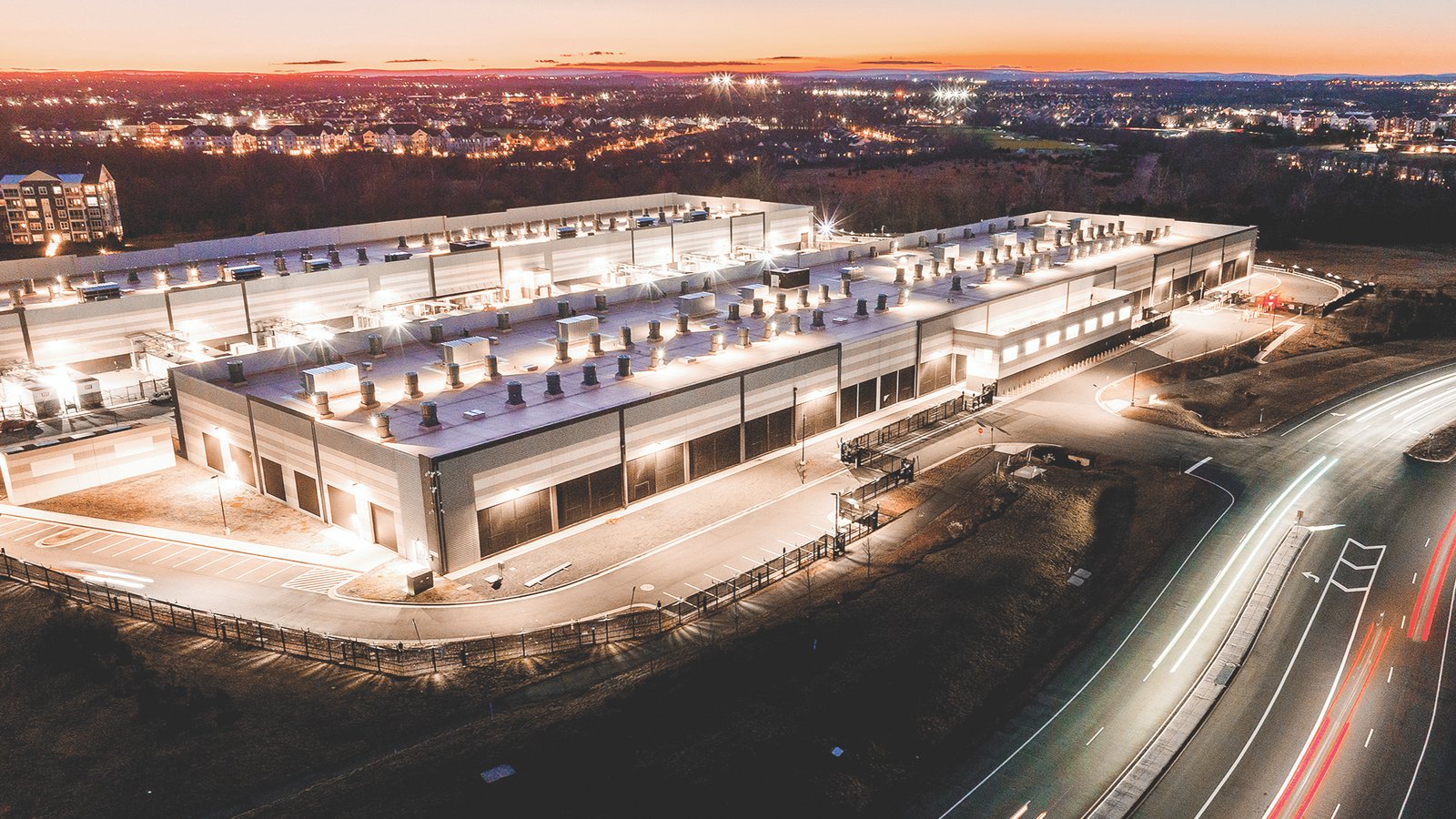
The popularization of artificial intelligence reignited a worldwide debate about the environmental impact of technology. Between alarmist forecasts and imprecise information, data centers returned to the center of the conversation. Many still see them as large consumers of energy and water. However, by observing up close what companies like AWS and other giants of the sector have been implementing, the picture changes in a striking way.
Amazon took on ambitious environmental commitments by creating the Climate Pledge, which foresees zeroing its net emissions by 2040. One of the most important steps of this agenda is in energy. All the company’s operations, including data centers worldwide, came to be supplied by renewable sources. The original goal was 2030. The result was achieved in 2023.
The advance only became possible thanks to more than 600 renewable projects around the world, in addition to purchases of clean energy supply certificates. These investments make Amazon the largest corporate buyer of renewable energy on the planet. In Brazil, the highlight is the wind complex located in Rio Grande do Norte, with energy production equivalent to the consumption of more than 100 thousand residences.
Water use in perspective
The popular perception that data centers consume large volumes of water is not confirmed in practice. The data centers of large data centers are designed to operate most of the time without depending on this resource. On the global average, 95% of AWS’s operation occurs without any use of water for cooling.
When it is necessary, the system works in a closed circuit, which prevents the disposal of heated water into the environment. The operation results in an average index of only 0,15 liter consumed per kilowatt-hour. It is one of the lowest values in the sector. For more intense workloads, such as those of artificial intelligence, the company uses a combination of air and special liquids to optimize performance and eliminate waste.
Innovation to consume less
AWS invests in a proprietary line of processors created to increase energy efficiency. The Graviton chip reduces energy spending by up to 60%. The Trainium and Inferentia families also deliver superior performance for artificial intelligence applications with lower electrical demand.
Another relevant point is the design of the servers. They withstand higher temperatures, which decreases the need for constant cooling. For customers who migrate from traditional physical structures to the cloud, the reduction of the carbon footprint can reach 99%, depending on the type of application.
To complete it, there is customer training to use cloud resources more efficiently. “We cannot forget the most important piece when we talk about sustainability in the context of cloud computing: the customer, who will make use of all of this. If, at the end, he triggers unnecessary resources, or does not know how to take advantage of the service in the best way, we are not contributing to sustainability – neither of his business nor of the planet,” explains Fernanda Spinardi, head of customer solutions at AWS Brazil. “Once on AWS, it is always possible to optimize the workload. The customer can modernize his applications so that they consume fewer and fewer resources within the cloud, and this is a central point of our culture: we call to teach him to spend less,” she adds.
Impact in Brazil
AWS has operated in the Country since 2011. In this period, US$ 3,8 billion have already been invested in local infrastructure. The projection is to reach an additional US$ 1,8 billion by 2034. In addition to the operation, the company maintains a professional qualification program. More than 900 thousand Brazilians have already been trained in digital skills.
There are also environmental initiatives driven by artificial intelligence. A pilot project in partnership with the climate tech Kilimo, implemented in the Rio Tietê region, has the potential to save 200 million liters of water per year. The initiative contributes to Amazon’s global goal of returning to the planet more water than it consumes by 2040. “These 200 million represent the saving in São Paulo, around the Tietê. In the world, they are billions of liters of water saved. Even because, let’s agree: if there is a lack of water in the Tietê, there will not be water for us, human beings, and for our operation. For this reason, it is fundamental to act so that everything works in the best way, generating benefits for society,” concludes Fernanda.