
If there is a place where global retail thinks about the future, that place is New York during the NRF. More than a fair, the event is the main point of convergence for the sector, where trends stop being discourse and start guiding real strategic decisions.
With more than 110 years of history, the event brings together thousands of executives and more than a thousand exhibitors from all over the world. It is there that C-levels share practical learnings, bets in execution and concrete changes in business models. It is not theory. It is retail in motion.
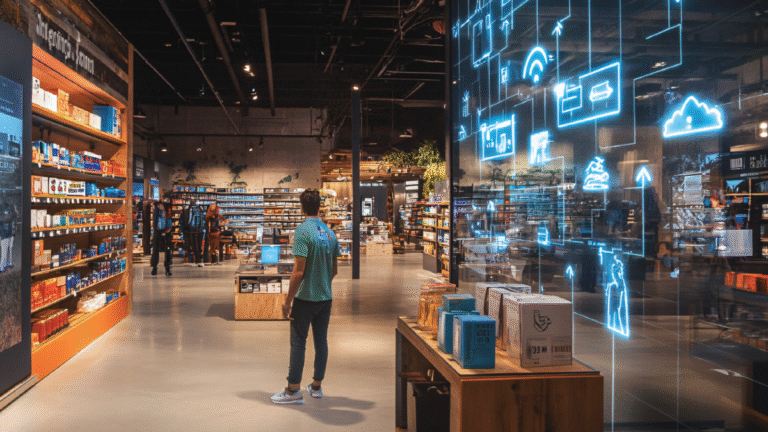
Personalization throughout the entire journey, use of data, analytics and artificial intelligence, real integration between physical and digital, and solutions focused on operational efficiency without sacrificing the customer experience were some of the highlights among lectures and brand stands.
But the NRF also reinforces a key point: innovation does not happen only on the stage and on the floor of the fair. It happens in the stores. New York becomes a living laboratory, where brands test formats, narratives and new relationship models. Understanding the NRF is understanding where retail is going – and how to prepare to get there.
See how some global brands are reinventing their physical spaces to be not just a space for transaction, but a welcoming environment where the customer “lives” the brand, its story and its territories.
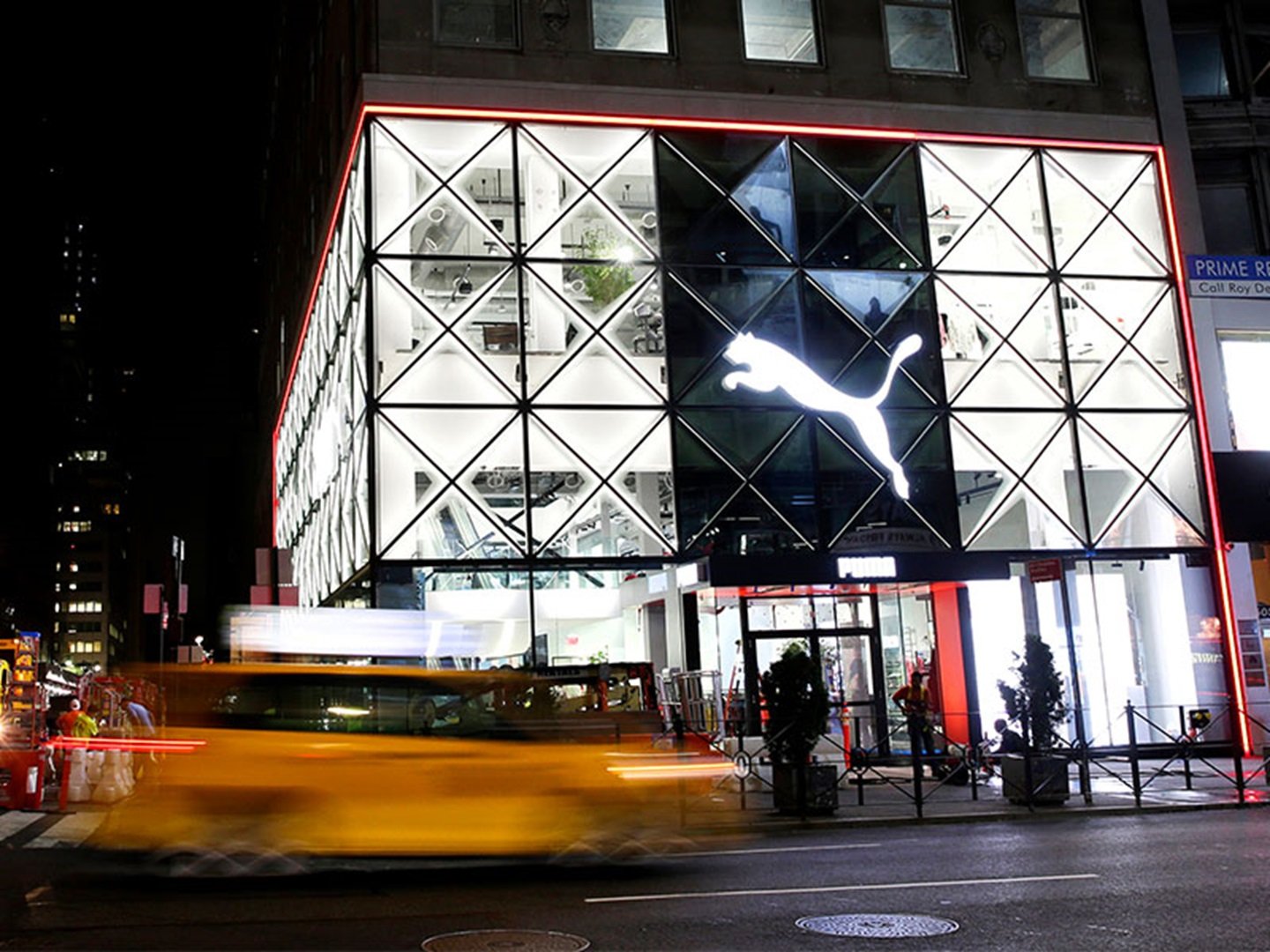
Puma Flagship – store as a cultural hub
The flagship of Puma (photo above) shows how a sports brand can go much beyond selling product. The space was designed as a hub cultural where sport, fashion and lifestyle coexist.
Since the entrance, the store tells stories and provokes attitude. Technology appears in a functional way, supporting storytelling, launches and collabs, without competing with the experience.
Stations for gait analysis to define the best sneaker to be bought, customization areas and events with athletes and creators reinforce the role of the store as a meeting point. It is not just a point of sale. It is a platform for relationship and building of community
Nespresso: when the store becomes a destination
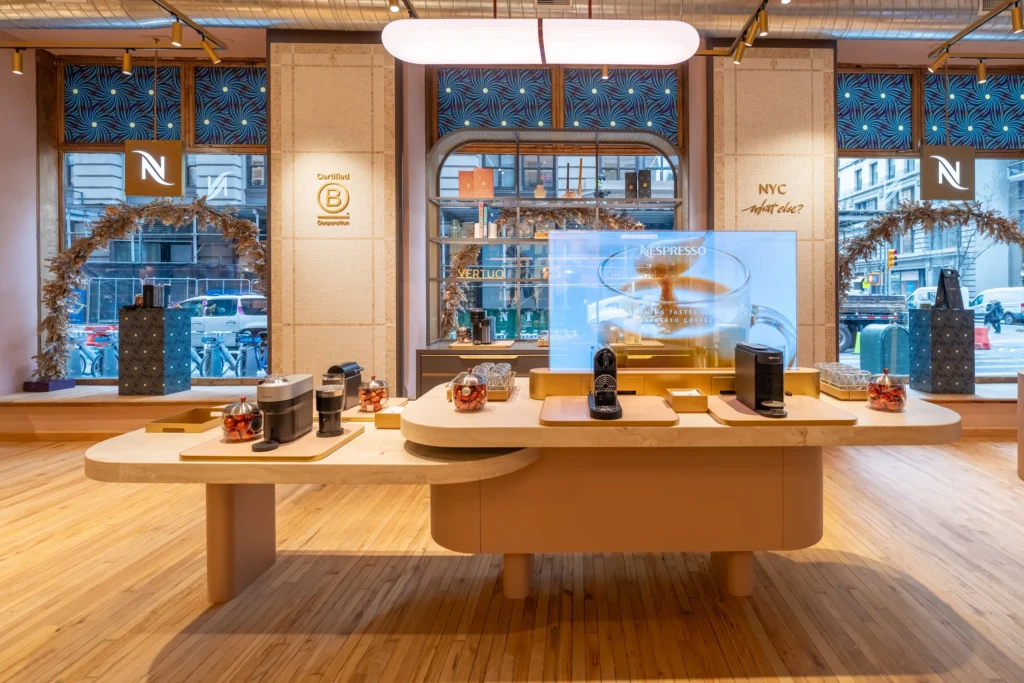
The Nespresso Boutique is one of the best examples of how physical retail became an experience platform. Buying coffee almost becomes the final detail.
With two floors in the Flatiron District, the space invites the consumer to explore aromas, blends and methods without pressure. Guided tastings, educational areas and an experimental coffee bar transform the visit into learning and pleasure.
The consumer chooses, prepares, experiences and stays. The more time they stay, the more bond they create. The store stops being a point of sale and becomes a destination.
Adidas – sports as culture and narrative
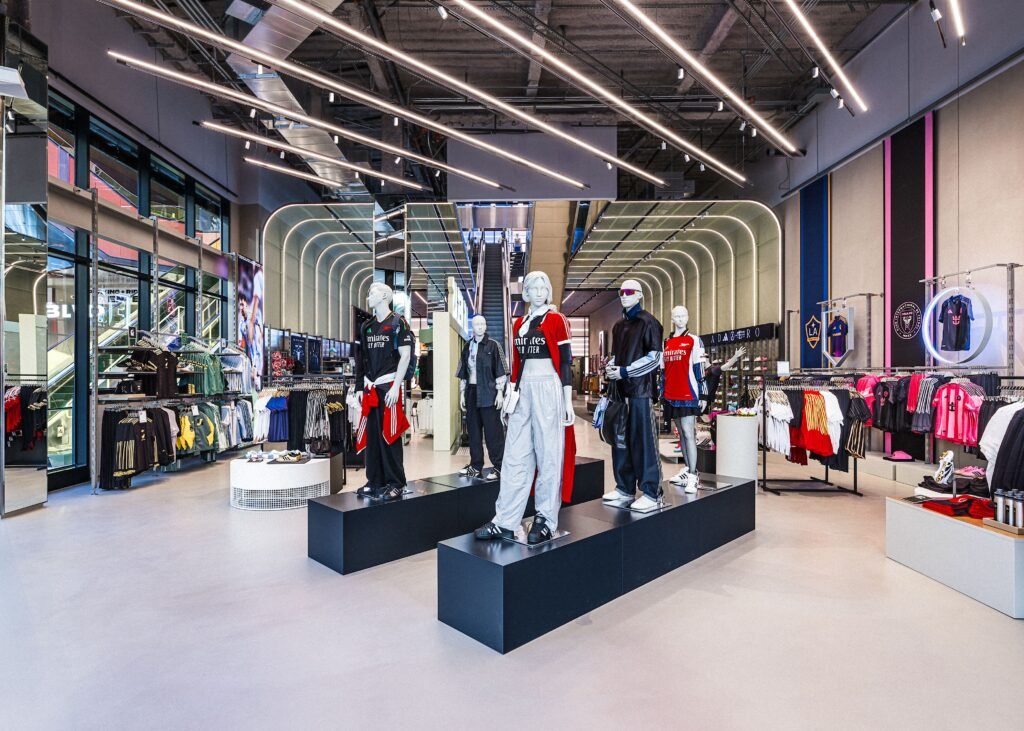
The flagship of Adidas translates with clarity what the NRF has been reinforcing: physical store does not compete with digital. It complements.
With atmosphere inspired by the next World Cup, the store mixes products, history and culture. Mannequins with faces of real athletes, diversity represented and historical pieces create an environment that borders on the museological, but without losing commercial fluidity.
There is customization of jerseys, living areas, bleachers to watch games and even space for photos with a statue of Adi Dassler, founder of the brand. The result is belonging. The store delivers context, memory and experience – something that e-commerce simply cannot replicate.
Crate & Barrel – context sells more than product
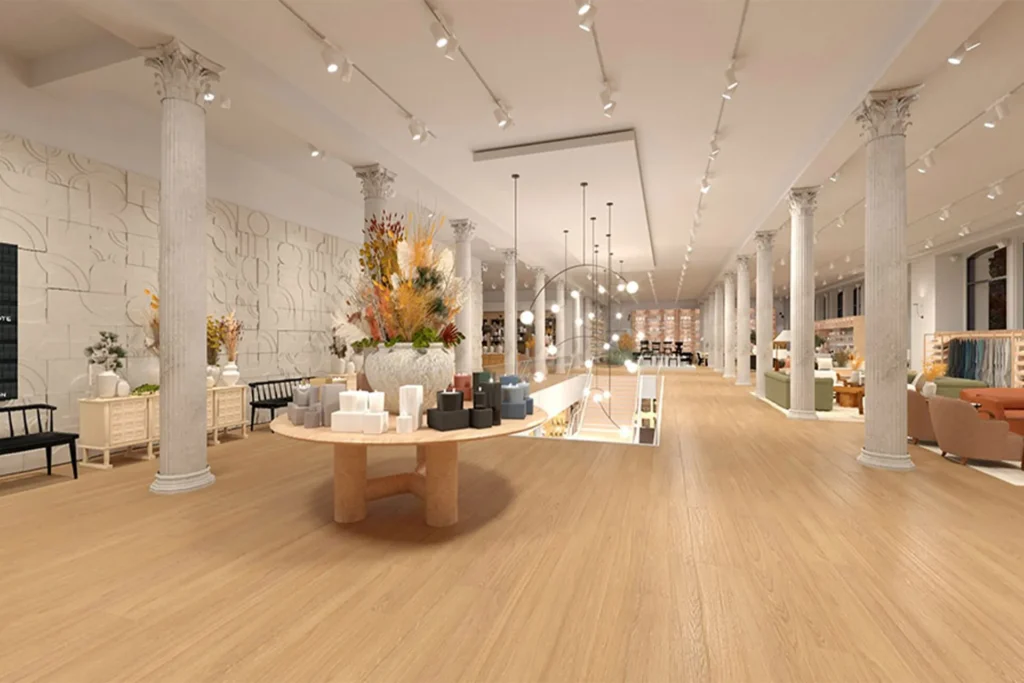
In Crate & Barrel, almost nothing seems to be for sale. And that is the secret. The products appear inserted in complete contexts: living rooms, kitchens, bedrooms and set tables.
Instead of choosing isolated items, the consumer imagines a whole life happening there. The fluid layout invites to walk without haste and elevates the average ticket without explicit commercial effort.
Technology is invisible and functional. Nothing steals attention from what only the physical delivers: scale, sensation and immediate desire.
Printemps – luxury that provokes
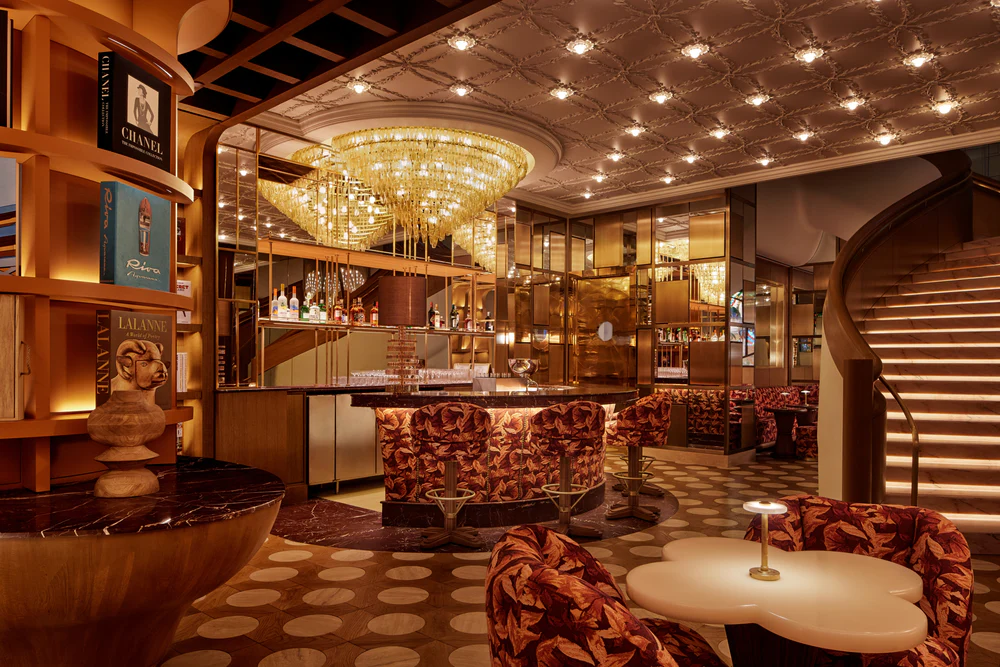
Upon arriving in New York, Printemps did not try to adapt to the American model. It preferred to provoke. The store mixes fashion, beauty, gastronomy and experience in a format that completely escapes from the traditional department store.
The space bets on curation, scenography and rhythm. Fitting rooms become social environments. Each area functions as a chapter of a larger narrative.
Closer to a contemporary gallery than to a conventional store, the flagship leaves clear the path of premium retail: less excess of product, more narrative, culture and experience.
Louis Vuitton – when the work becomes experience
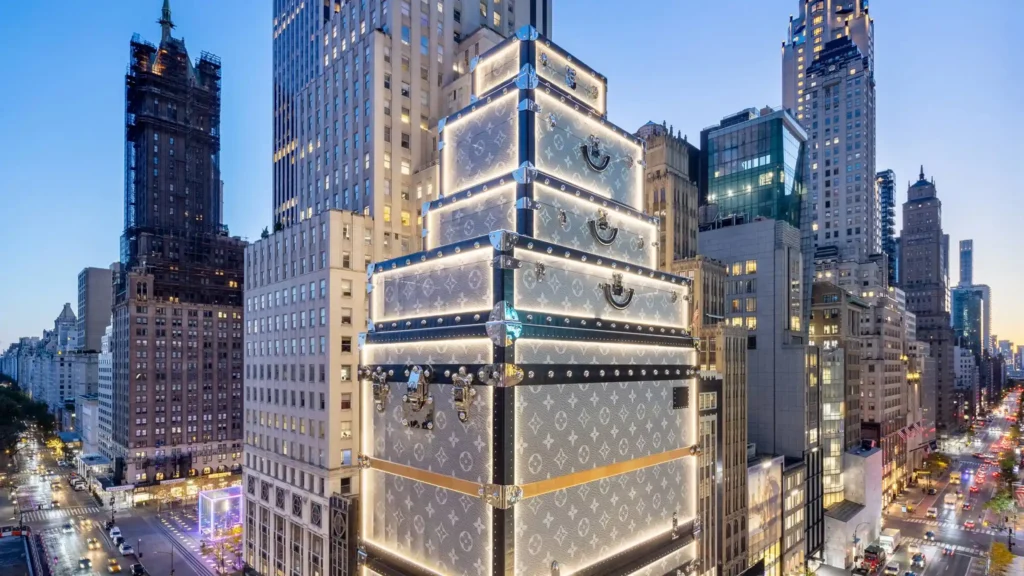
While building its new store on 5th Avenue, Louis Vuitton transformed a classic retail problem – a long and visually unappealing construction – into one of the most intelligent branding actions of recent years.
Instead of generic fences, the facade was covered by gigantic trunks, historical icons of the brand. The result is an urban installation that functions as product, memory, heritage and spontaneous media at the same time. Tourists stop, photograph and share.
Even with the store closed, the brand remains active, desirable and present in the city’s cultural conversation.