
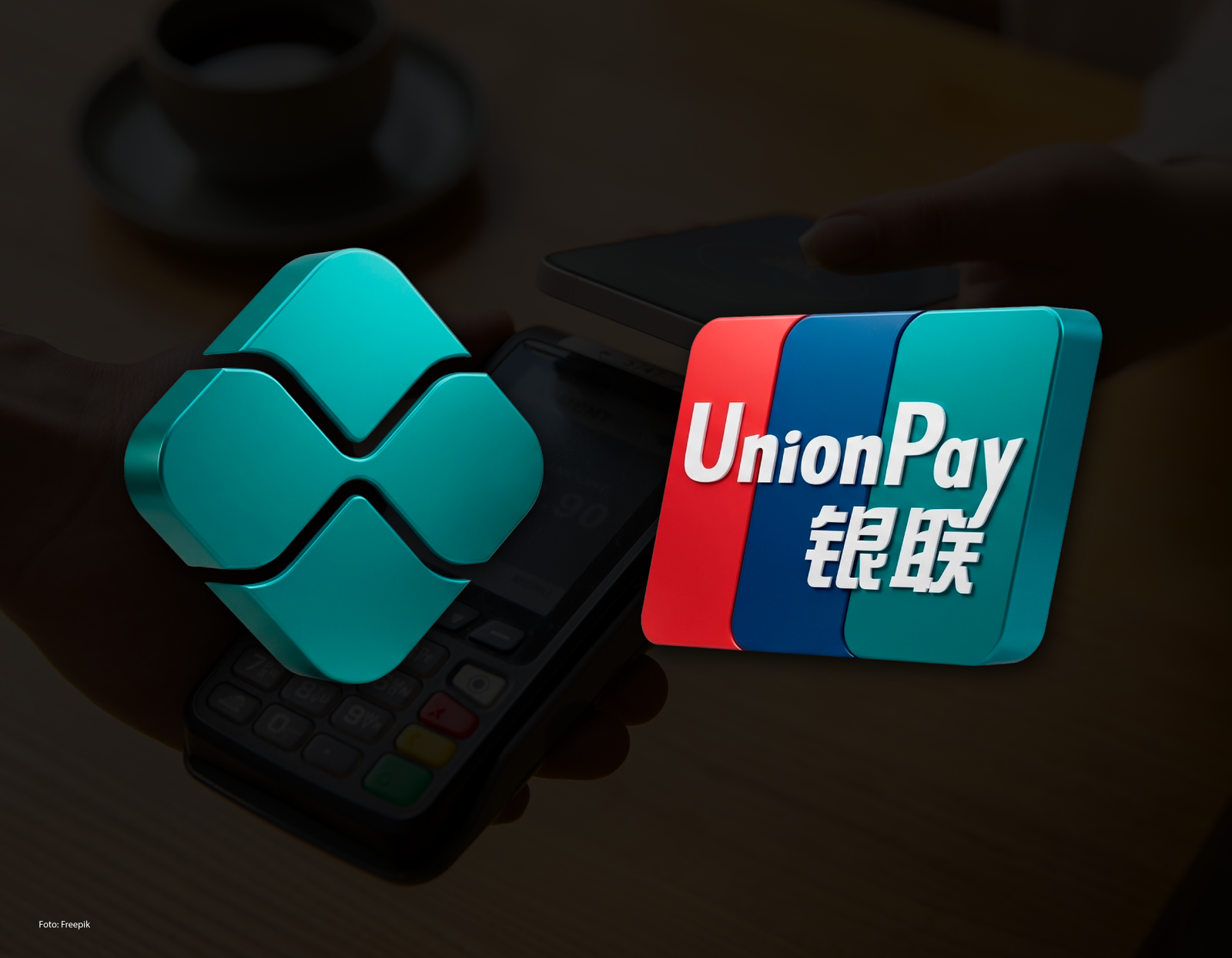
Financial cooperation between Brazil’s Central Bank and the People’s Bank of China has paved the way for integration between Pix and China’s UnionPay International network. A pilot QR Code interoperability program already allows users of Chinese payment applications to make purchases at Brazilian merchants connected to the country’s instant payment network.
The initiative could also pave the way for Pix to be accepted in China. The issue was discussed during the fourth meeting of the China-Brazil Strategic Financial Cooperation Working Group, held in Shanghai on June 9, with the participation of Gabriel Galípolo, president of Brazil’s Central Bank.
Hsia Hua Sheng, vice president of Bank of China, said China is interested in incorporating Pix. The Brazilian payment system has already been integrated into e-commerce platforms such as AliExpress.
During the pilot phase of interoperability between the two countries, users of the Chinese UnionPay app and commercial banking applications connected to the UnionPay Network Payment Platform will be able to make direct QR Code payments at merchants integrated into Brazil’s real-time Pix payment network.
The new instant payment channel expands UnionPay’s presence in the Brazilian market, where its cards are already accepted. The Chinese company has more than two decades of experience and has issued more than 9 billion cards across 82 countries. Its network is accepted in more than 180 countries and competes globally with Visa and Mastercard.
In addition to payments, UnionPay cards issued in China can also be used to withdraw cash in Brazil. Cardholders can currently make withdrawals at ATMs operated by Banco24Horas and Saque & Pague, as well as use Rede and Stone terminals, which also accept UnionPay cards.
Pix expands internationally
Launched by Brazil’s Central Bank in 2020, Pix has become one of the country’s main payment methods and has been expanding into international transactions through intermediaries and fintechs. The system is already accepted in countries including Argentina, Chile, Uruguay, Paraguay, the United States, Portugal, Spain and France. In these transactions, partner companies handle real-time currency conversion.
The model allows Brazilians to use Pix while traveling abroad. In markets with significant numbers of Brazilian tourists, such as the United States, Argentina, Uruguay, Portugal and Chile, merchants charge customers in the local currency, while an intermediary company calculates the exchange rate at the time of purchase. The corresponding amount is then debited from the consumer’s Brazilian bank account in reais.
The movement also works in the opposite direction, supporting international tourism in Brazil. In this model, foreign visitors can use balances held in international digital wallets to make Pix payments at Brazilian merchants, with automatic currency conversion.
In Brazil, Treeal, a payment processing company that handles more than 200 million Pix transactions per month, became the country’s first issuer under the initiative. The first cards were issued in March 2026 to a strategic group of entrepreneurs made up of executives already active in the Brazilian and Chinese markets. Transactions will be processed by the China-Brazil digital platform ViaBravo.