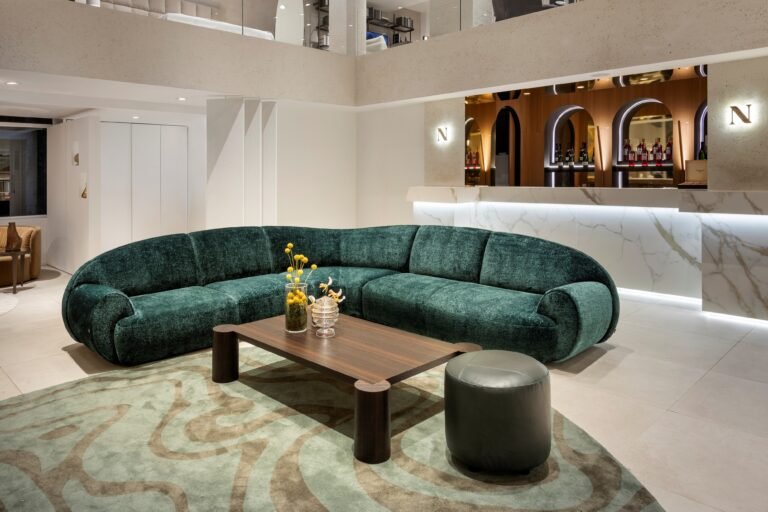

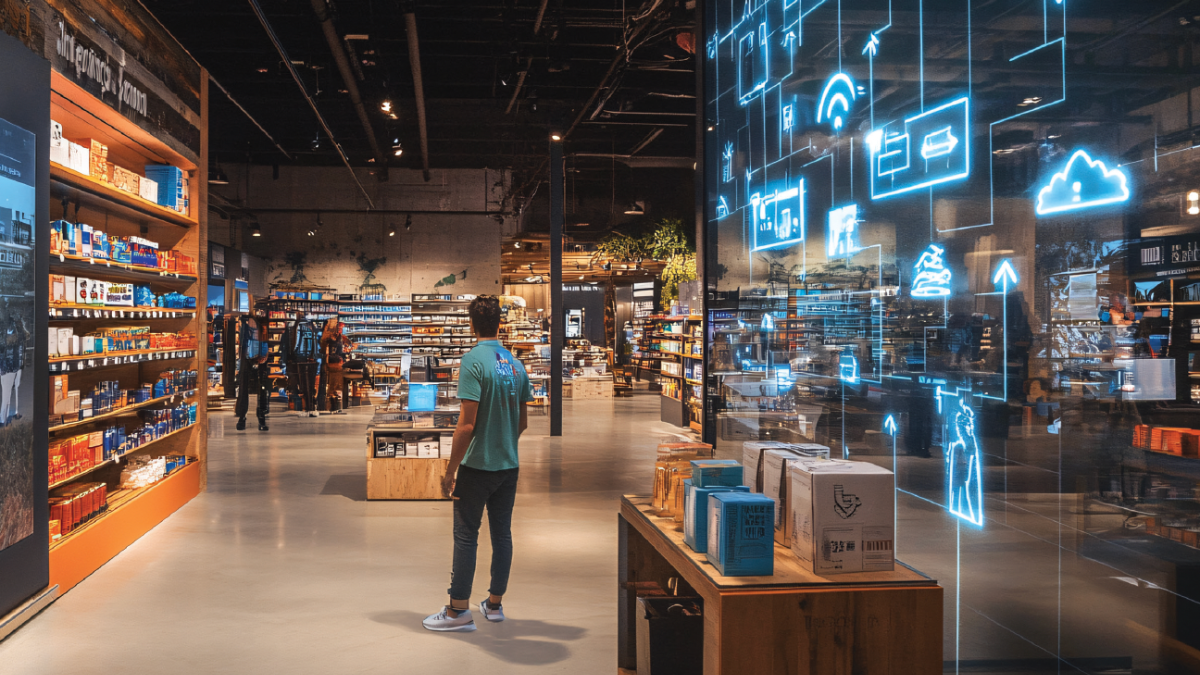
The physical store stopped being just a point of sale and started to be a point of experience, service and customer support. The space needs to reflect the consumer’s complete journey: from research on the cell phone to picking up the order, from online price comparison to in-person service, all within the same brand logic. In this scenario, architecture gains prominence because it organizes the flow, gives materiality to the omnichannel strategy and transforms every square meter into part of an integrated journey.
“The physical store will always have its place. And today, more than ever. This is because it started to concentrate something that the digital environment cannot fully deliver: experience. It is about direct contact with the product, added to a carefully thought-out environment, capable of expanding and qualifying this experience”, emphasizes architect Denise Barretto.
In practice, this means designing spaces that follow the client’s real path, and not just the flow idealized on paper. The journey often starts in the search engine, passes through social networks, crosses e-commerce and flows into the physical store to try, clear doubts, exchange or pick up an order made hours before.
“The omnichannel brought a change in scale: the physical store started to be just one of the brand’s touchpoints, and no longer the absolute center of the operation. This requires more strategic projects, in which the physical space talks with digital platforms, logistics and consumer behavior”, says architect Rafaella Manso.
If the physical environment does not provide support — lack of signaling, pickup area, dedicated counter or clear flow —, the experience breaks. Architecture enters as a translation tool between strategy and operation: it designs touchpoints, creates intuitive routes and ensures that the client understands, in the space, the same narrative they receive in digital channels.
For Camila Palladino, it is even more important to increase the consumer’s time in the store: “When the consumer feels at ease and easily understands the space, he stays longer, and time is a valuable asset in retail”.
For interior designer Claudia Tieko, “the store transforms into a stage… The environment needs to invite the customer to stay, explore and interact, something that e-commerce cannot reproduce at the same emotional level”.
In this scenario, the project becomes a strategic investment: it strengthens brand identity, increases stay time, improves perception of value and contributes directly to performance. The projects of Puma, Adidas, Printemps and Louis Vuitton show stores conceived as environments of narrative, culture and coexistence. “Architecture becomes the main element of brand expression”, believes Rafaella.
In contemporary retail, no space is neutral: every meter communicates and builds value.
Creative tip
How do color trends, such as Pantone indications, influence commercial projects today?
For designer Claudia Tieko, Pantone indications function as a true thermometer of global behavior. It is not just about choosing a “pretty color”, but about following a brand that conducts deep research on consumption, emotions and social movements.
In commercial projects, applying colors aligned with these palettes signals that the store is connected to trends. Color becomes a tool for attraction, permanence and perception of value. These trends can be explored in settings, windows and visual communication.
When well applied, colors help tell the brand’s story, strengthen the retailer’s identity and create a sensory experience that goes beyond the sale – generating connection and memory.