
Artificial intelligence is no longer just an additional feature but has become the main differentiating factor of the electronic products showcased at WAIC 2026 (World Artificial Intelligence Conference), held in Shanghai, China.
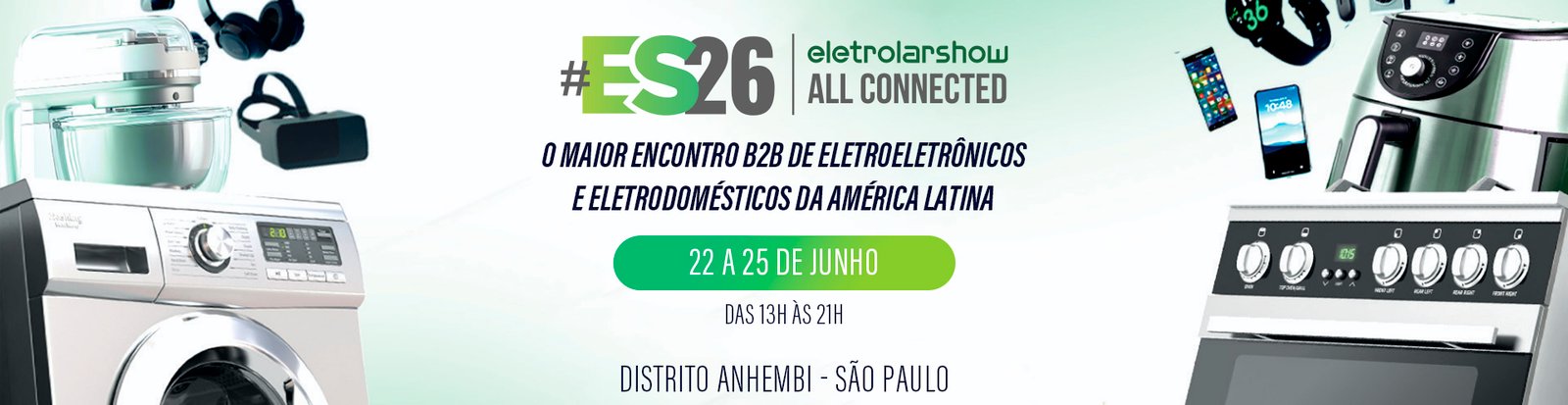
The Eletrolar All Connected Group attended the event and found that, during its visit to the AI Experience area, categories such as smart glasses and earbuds, smartphones with AI agents, service robots, educational equipment, and health monitoring solutions stand out as those with the greatest short-term commercial potential in Latin America.
With more than 1,100 participating companies, around 3,000 products and technologies on display, and hundreds of product launches, WAIC reinforced a trend that is expected to accelerate over the coming years: artificial intelligence is moving beyond applications and digital platforms to become embedded directly into physical devices, transforming the way consumers interact with technology.
The demonstrations spread across the Shanghai World Expo, Zhangjiang, and West Bund/Xuhui venues presented a “city of the future,” bringing together solutions for industry, mobility, entertainment, education, healthcare, and everyday living. What these products had in common was their ability to perceive their surroundings, understand the user’s context, and perform tasks autonomously.
Among the main trends observed during the exhibition were the integration of AI into hardware, the evolution of robots toward practical applications, multimodal experiences—combining voice, vision, movement, touch, and sensors—and the verticalization of solutions for specific industries, including retail, hospitality, healthcare, education, sports, and mobility.
Smartphones and wearables gain intelligent agents
Consumer devices were among the highlights of this year’s edition. Honor unveiled the concept of the world’s first “robot phone,” a smartphone that combines an artificial intelligence agent with a camera mounted on a four-degree-of-freedom movable system. The device follows the user’s movements, recognizes gestures and facial expressions, responds to natural language commands, and physically moves the camera to perform different tasks.
The concept represents a shift in the relationship between users and smartphones. Instead of simply opening apps, the device interprets intentions, coordinates functions, and proactively carries out actions.
Smart glasses also took center stage at the event. The latest generations demonstrated features such as real-time translation, payments, visual recognition, voice commands, and direct access to AI agents. Among the highlights, models presented by Qwen incorporate simultaneous conversation, eye tracking, iris recognition, and monitoring of physiological indicators such as heart rate, blood oxygen levels, and heart rate variability.
Robots move beyond demonstrations and take on real-world tasks
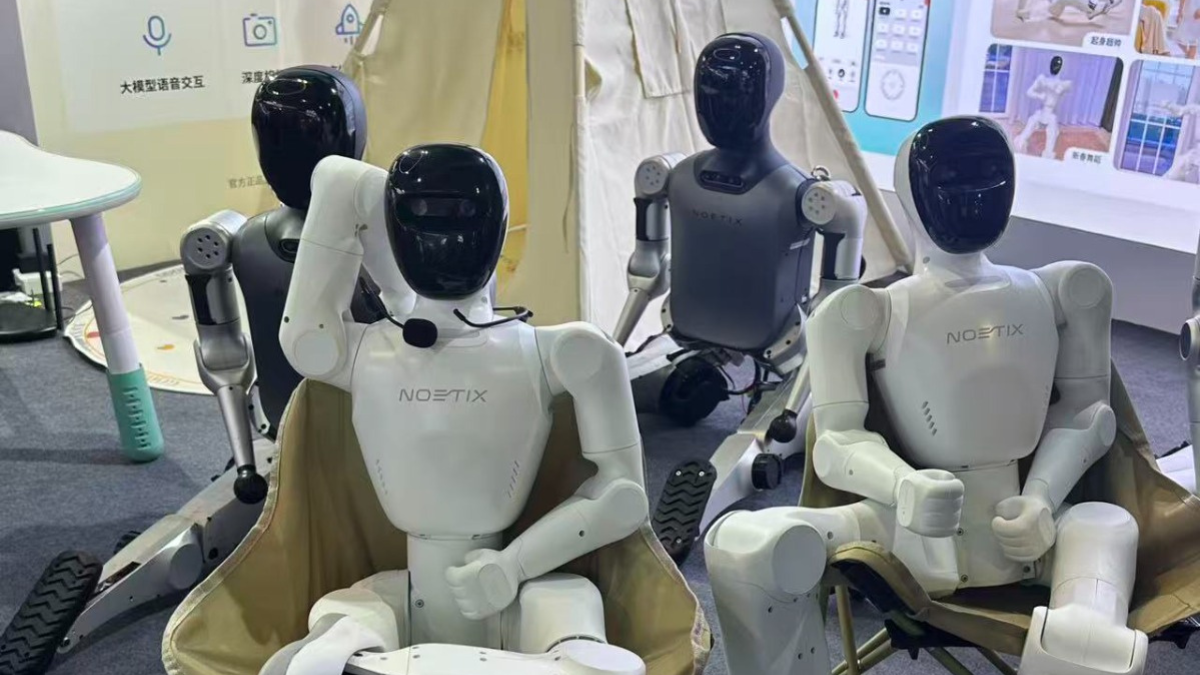
Another clear trend was the evolution of humanoid robots toward concrete commercial applications.
Matrix Robotics showcased the MATRIX-3 operating a coffee machine completely autonomously. The robot selected cups, prepared beverages, served visitors, and transported objects, demonstrating multimodal perception, force control, and precise manipulation. According to the company, applications like this can be deployed in stores, hotels, restaurants, trade shows, cultural centers, and other customer-facing environments.
Sharpa’s robot also attracted attention by using a conventional camera designed for human hands. The robot identified visitors, positioned the camera, framed the shot, captured the image, and delivered a printed photograph, demonstrating a high level of coordination between computer vision, tool manipulation, and motion control.
Among the most unusual demonstrations was DaxAI Robot’s Qiji X1. The quadruped robotic horse functions as an intelligent ride for different types of terrain, automatically adapting its movements to the surface and expanding possibilities for mobility and leisure.
Brain-computer interfaces move closer to consumers
Advances in brain-computer interfaces were also evident during the visit. In one of the event’s most popular demonstrations, visitors controlled games and claw machines using only brain signals captured by non-invasive electroencephalography (EEG) sensors.
Although still at an early stage of adoption, the technology highlights future possibilities in areas such as accessibility, rehabilitation, education, entertainment, and electronic device control.
Education and healthcare emerge as the most promising sectors
Artificial intelligence also gained ground in vertical applications.
In education, NetEase Youdao presented an ecosystem consisting of smart pens, AI-powered earbuds, productivity agents, and knowledge management platforms capable of organizing documents, comparing content, and automatically structuring information. Meanwhile, the AI Learning Agent Lab demonstrated digital tutors that follow students’ reasoning, ask questions, explain learning steps, and adapt content to each learner’s profile.
In healthcare, the Lan Xiao Yi robot integrated medical sensors, remote care, and artificial intelligence models for neurological risk monitoring and screening. One demonstration used contactless facial analysis to generate, in about 30 seconds, indicators related to heart rate, blood oxygen saturation, blood pressure, and emotional state.
What WAIC signals for the market
More than simply showcasing new products, WAIC 2026 signaled an important shift for the consumer electronics industry. Artificial intelligence is becoming embedded in devices themselves, enabling them to understand their surroundings, interpret user intentions, and perform actions in the physical world.
For the Latin American retail market, categories such as smart glasses, wearables, smartphones with embedded AI agents, service robots, educational solutions, and health-focused devices appear to have the greatest commercial growth potential over the coming years, reflecting AI’s evolution beyond software and paving the way for a new generation of intelligent products.